The Legacy Model Is Broken – And Compliance Is Paying the Price
For decades, internal control frameworks operated on a simple but flawed premise: detect what went wrong, then fix it.
Monthly bank reconciliations. Post-facto supervisory sign-offs. Quarterly audit samples reviewing 5% of transactions while the other 95% moved through unexamined. These mechanisms were not designed for a world where a rogue vendor disbursement can execute in milliseconds and an unauthorized ERP override can be buried inside 40,000 journal entries by end of day.
The result? Governance that arrives late to its own crime scene.
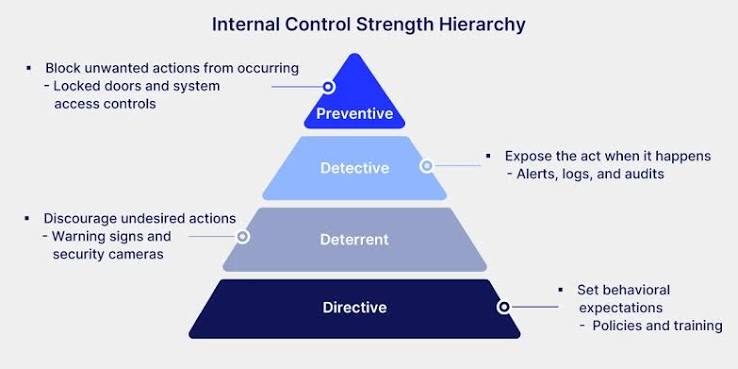
The intelligent digital enterprise demands something fundamentally different – internal controls that prevent, detect, and adapt in real time, embedded invisibly into the fabric of operational workflows. Not a checkpoint at the end of the process. A guardian inside the process.
Continuous Control Monitoring: The Architecture of Real-Time Governance
Continuous Control Monitoring (CCM) is not simply “faster auditing.” It is a structural reimagination of how controls are designed, deployed, and maintained.
Where traditional audit sampling reviews a fraction of activity after the fact, CCM leverages automated business logic and machine learning to inspect 100% of transactions as they traverse ERP systems – SAP, Oracle, Microsoft Dynamics, or otherwise – at the precise moment of origination.
Consider what this means in practice:
• Unauthorized posting overrides – flagged the instant a user circumvents approval thresholds, not discovered in the next period-close review
• Duplicate vendor disbursements – identified across multiple invoice formats, currencies, and entity codes before payment clears
• Split-purchase order schemes – detected through behavioral pattern recognition, even when deliberately structured to fall below authorization limits
The time gap between control breach and remediation – historically measured in weeks or months – collapses to near zero.
This is not incremental improvement. It is a fundamentally different risk posture.
The Alert Fatigue Trap – And How Adaptive Thresholds Solve It
Here is the uncomfortable truth that many governance professionals encounter when implementing CCM: overly rigid automated controls create their own failure mode.
When every low-value, routine transaction triggers a review flag, two things happen. First, operations grind to a halt. Second – and more dangerously – reviewers begin dismissing alerts automatically, because volume has conditioned them to expect false positives. This is alert fatigue, and it is as much a control failure as having no monitoring at all.
The solution lies in adaptive risk thresholds – dynamic scoring models that assess each transaction against contextual variables: vendor history, transaction size, user behavior patterns, time-of-day anomalies, departmental norms, and regulatory exposure.
The architecture becomes intelligent:
Risk Profile Control Response
Low-risk, routine transaction Automated approval, logged silently
Moderate anomaly Soft flag, queued for periodic batch review
High-risk or novel activity Real-time escalation to human reviewer
Critical breach signal Instant block + governance notification
The result is a control environment that moves at the speed of business for 95% of operations, while concentrating human judgment precisely where it adds the most value.
ICFR in the Age of Autonomous Decision-Making
The Sarbanes-Oxley Act of 2002 defined Internal Control over Financial Reporting (ICFR) in a world where humans made every material financial decision. That world no longer exists.
Today, AI-powered agents are setting customer credit limits, authorizing vendor payments, adjusting pricing models, and triggering intercompany transfers – autonomously, at scale, around the clock. This creates a governance gap that most organizations have not yet formally addressed.
If an algorithm makes a decision that materially impacts financial reporting, who is accountable for that control?
Expanding ICFR to cover intelligent systems requires governance professionals to think beyond process controls and into a new domain:
• Model logic documentation – the decision rules embedded in AI models must be version-controlled, documented, and subject to change management protocols equivalent to those applied to financial systems
• Data ingestion pipelines – the integrity of inputs flowing into decision models is itself a control environment; corrupted or manipulated data produces corrupt outputs regardless of model quality
• Algorithmic permission structures – AI agents must operate within defined authorization boundaries, with clear escalation protocols when decisions exceed pre-approved risk thresholds
• Model audit trails – every autonomous decision must generate a traceable, immutable record sufficient to support both internal review and regulatory examination
This is not theoretical risk. As regulators globally begin scrutinizing algorithmic accountability – from the EU AI Act to evolving SEC guidance on AI in financial reporting – organizations that fail to extend their ICFR frameworks to cover AI systems are building a material weakness into their governance architecture.
Governance as Competitive Advantage
Here is where the conversation must shift – and where most compliance professionals have not yet arrived.
The traditional framing of internal controls positions governance as a cost of doing business: a necessary drag on operational speed, a constraint imposed by regulators, a function that says no so the business doesn’t get into trouble.
That framing is obsolete.
When internal controls are intelligent, automated, and embedded into workflows, they do not slow down the business – they accelerate it. A treasury team operating with real-time fraud detection can approve vendor payments faster, not slower, because confidence in the control environment removes the need for manual pre-approval queues. A CFO with a live CCM dashboard can close books faster, make capital allocation decisions with greater confidence, and respond to board inquiries with data that is current, not stale.
Integrated intelligent governance transforms compliance from a restrictive bottleneck into an operational capability – one that enables high-speed, high-confidence business execution at enterprise scale.
The organizations that understand this first will not just be more compliant. They will be structurally faster, more trustworthy to investors, and more resilient under audit scrutiny than their competitors.
The Practitioner’s Imperative
If you are an accountant, auditor, CFO, or governance professional reading this, the question is no longer whether AI will reshape your control environment. It already has. The question is whether your frameworks are evolving fast enough to govern what is already operating inside your organization.
Three immediate priorities for any finance or GRC professional in 2025:
- Map your AI decision touchpoints – identify every process where an algorithm makes or influences a decision with financial reporting implications
- Assess your CCM maturity – most organizations are still sampling. Build the business case for real-time monitoring on your highest-risk transaction flows first
- Expand your ICFR documentation – add model governance to your control matrix before your next external audit, not after
The convergence of intelligent decision-making and continuous control monitoring is not a future state. It is the present reality of every digitally mature enterprise. The governance infrastructure must match it.
Tags: #InternalControls #ICFR #ContinuousControlMonitoring #AIGovernance #GRC #FinancialReporting #RiskManagement #DigitalFinance